
Sleep regressions by age

A sleep regression is the everyday name for a stretch when a baby who was sleeping well starts waking more. It isn't a medical term, and health bodies don't define one. The one parents hear about most comes around four months, when sleep cycles become more regular. Later dips often coincide with new skills or separation anxiety.
"Sleep regression" is a phrase from parents, not from doctors. Health bodies don't use it, but they do describe what is happening at the ages when parents notice sleep getting worse. This page puts the two side by side.
Sleep regressions at a glance
| When parents ask about it | What health guidance says about that age |
|---|---|
| Around 4 months | Sleep cycles become regular from about four months (AAP). Many babies begin night waking again at four to five months (an NHS children's sleep service). |
| Around 6 months | Waking briefly at night and going back to sleep after a few minutes is normal at this age (AAP). Most babies roll from tummy to back (CDC). |
| 8 to 9 months | Separation anxiety can disrupt sleep from the second half of the first year (AAP). At 9 months most babies are shy, clingy or fearful around strangers and react when you leave (CDC). |
| Around 12 months | Most babies pull up to stand and walk holding on to furniture (CDC). |
| 15 to 20 months | Most take a few steps on their own by 15 months and walk without holding on by 18 months (CDC). |
| Around 2 years | Changes such as starting daycare, potty training, moving to a bed or a new baby can all disturb sleep (an NHS community trust). Separation anxiety usually fades around now (AAP). |
The first column shows the ages parents search for most, not official milestones. The CDC's milestones are things most children (75% or more) can do by that age.
Is a sleep regression real?
The waking is real. The word is misleading. Nothing in your baby's development is going backwards, and none of these stages is an illness. Sleep gets disrupted while something else is changing: how sleep itself works around four months, then new skills and new feelings about being apart from you.
KidsHealth notes that sleep problems are common in the second half of the first year. That is worth knowing at 3am. It isn't just your baby.
What helps at any age?
- Keep the bedtime routine. The NHS recommends a calming, predictable bedtime routine at the same time each night for young children.
- Put your baby down drowsy, before they are fully asleep. From four months the American Academy of Pediatrics says this helps babies learn to fall asleep on their own.
- Keep sleep times steady. The CDC's advice for toddlers is that consistent sleep times make it easier.
- Split the nights if there are two of you, so one of you is always rested.
When to check with your doctor
A sleep dip on its own is common. Talk to your doctor if it comes with a fever, poor feeding, fewer wet diapers or a child who isn't their usual self. If broken nights leave you struggling to cope, say so too.
4 to 12 months
- The 4-month sleep regression: what changes and what helps
The baby who slept suddenly doesn't. What is changing in their sleep around four months, and what actually helps.
Frequently asked questions
What ages are sleep regressions?
The ages parents ask about most are around 4 months, 6 months, 8 to 9 months, 12 months, 15 to 20 months and 2 years. Only the four-month change has a clear cause in health guidance: sleep cycles become more regular. The later ones tend to line up with new skills, separation anxiety or big changes at home.
How long does a sleep regression last?
No health body gives a figure. Separation anxiety, which the American Academy of Pediatrics links to disrupted sleep from the second half of the first year, usually fades around the second birthday.
Is a sleep regression a sign that something is wrong?
Usually not. But a fever, poor feeding, fewer wet diapers or a baby who isn't their usual self point to illness rather than sleep. Call your doctor if you see those.
Why does my 9-month-old suddenly wake at night?
Often it is separation anxiety. The American Academy of Pediatrics says it can disrupt sleep from the second half of the first year, and by nine months most babies react when you leave the room. It usually fades around the second birthday.
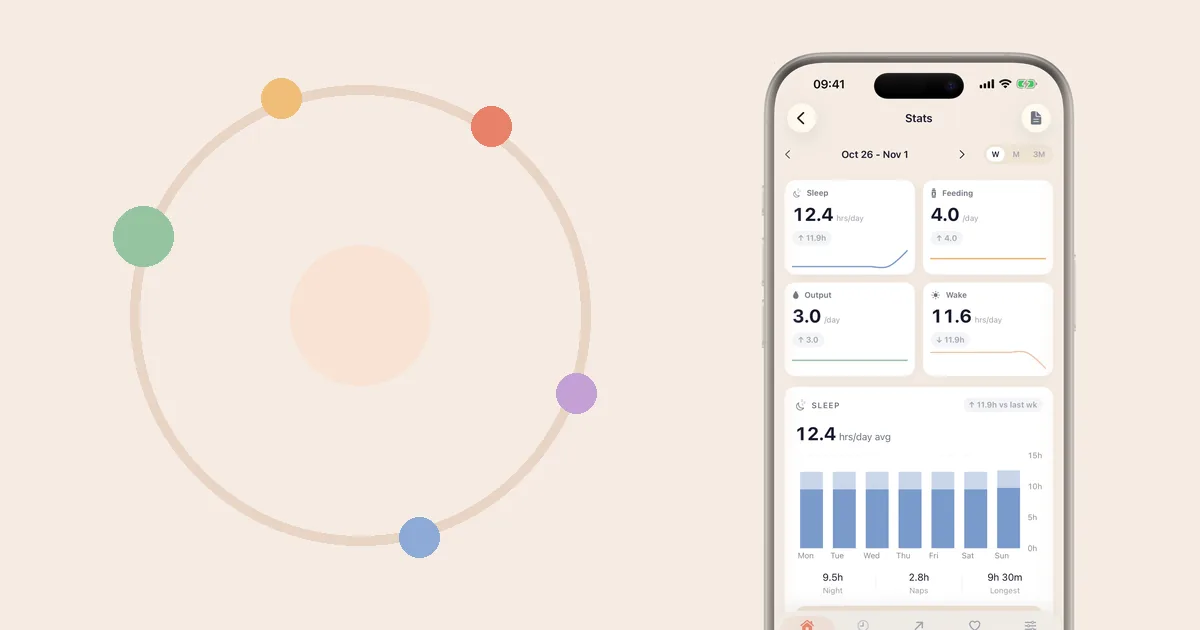
When nights get rough, a few days of sleep logged in TandemBaby show whether things are really getting worse or just feel that way, and both parents see the same picture. For how much sleep each age needs, see our baby sleep schedule by age.
Sources
- Getting Your Baby to Sleep, American Academy of Pediatrics, HealthyChildren.org
- Separation Anxiety & Sleeping Trouble in Young Children, American Academy of Pediatrics, HealthyChildren.org
- Sleep, American Academy of Pediatrics, HealthyChildren.org
- Milestones by 6 Months, Centers for Disease Control and Prevention
- Baby Sleep: 8- to 12-Month-Olds, KidsHealth (Nemours)
- Sleep (infants 0 to 12 months), Children's Sleep Service, Newcastle upon Tyne Hospitals NHS Foundation Trust
- Your toddler's sleep at 2 to 3 years, Wirral Community Health and Care NHS Foundation Trust
- Milestones by 9 Months, Centers for Disease Control and Prevention
- Milestones by 1 Year, Centers for Disease Control and Prevention
- Milestones by 15 Months, Centers for Disease Control and Prevention
- Milestones by 18 Months, Centers for Disease Control and Prevention
- Milestones by 2 Years, Centers for Disease Control and Prevention
- Sleep and young children, NHS
This is educational content, not medical advice. It is not a substitute for personal advice from your pediatrician, midwife or health visitor, who know your baby.